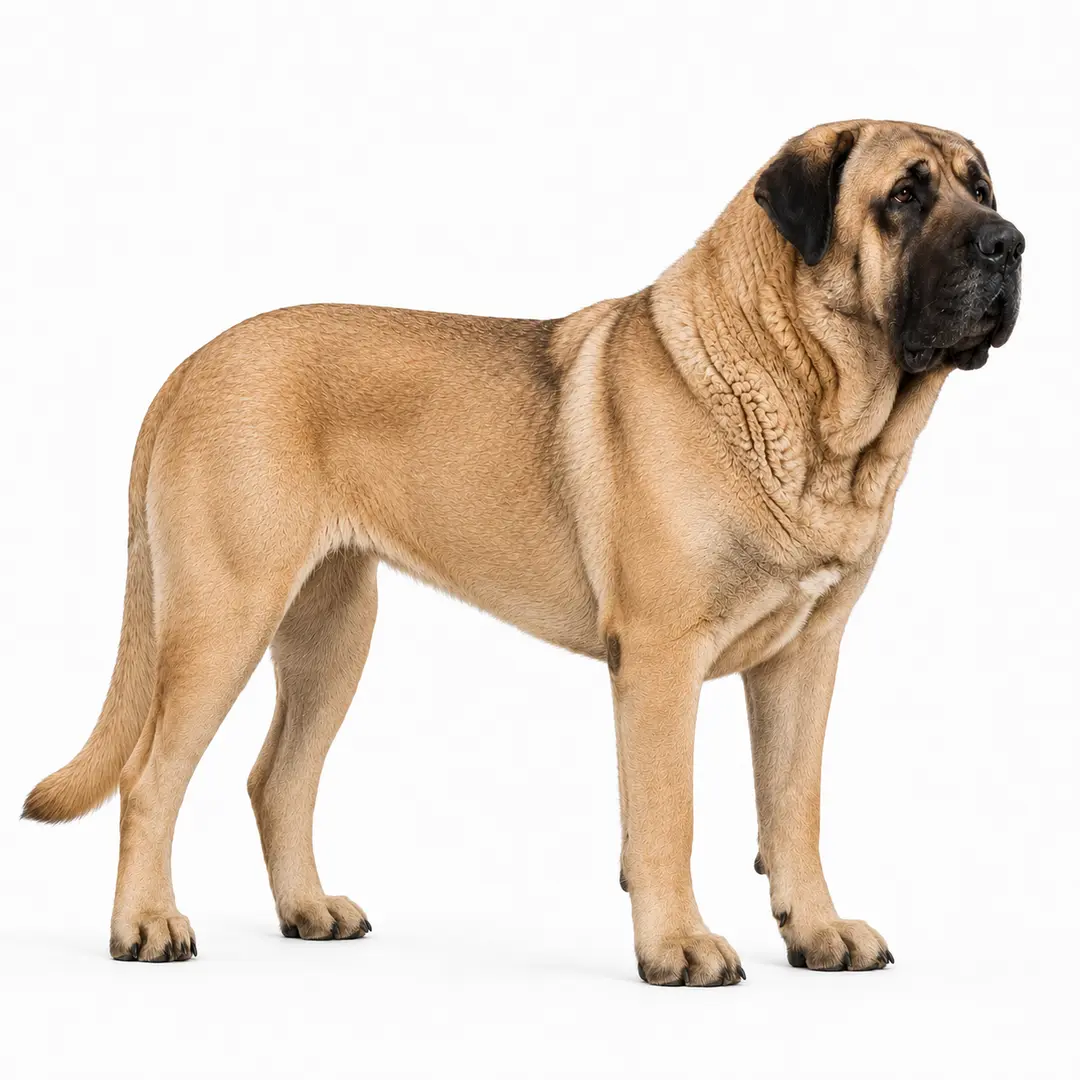
The Turkish Mastiff is internationally known as Aksaray Malaklisi, a giant livestock guardian from central Turkey. It is associated with Aksaray, where very large dogs have been used to protect flocks, farms, and properties. In Turkish regional use, it is distinguished from more well-known types such as the Kangal or the Anatolian Shepherd. The breed is not listed as a separate recognized breed by the FCI, so it must be described as a Turkish regional molosser with local recognition, not with broad status from international clubs.
General details
The Turkish Mastiff is a giant dog, with a strong bone structure, a broad head, a powerful neck, a deep chest, large legs and a substantial body. Official descriptions from Aksaray identify it as a very large dog from Aksaray and its surroundings, with thick legs and feet, a large head and pendulous lips. Males can reach very tall stature and weight, while females are smaller but still powerful. It should be strong and mobile, not obese. The coat is short to medium and dense. Common colors include fawn, gray, wolf gray, brindle, and shades with a dark mask, though local lines vary. Ears are sometimes cropped in traditional contexts, but cropping is prohibited or restricted in many countries and is not necessary for well-being. It is not a casual apartment breed. It needs secure fencing, space, controlled handling, and an owner who understands livestock guardians.
Breed history in brief
Great guard dogs have long been part of Anatolia's pastoral life. The Aksaray Malaklisi was developed in central Turkey as one of the largest regional types. Its name is tied to Aksaray, and local explanations relate "Malakli" to heavy lips. They were selected to deter predators, protect livestock, and guard rural properties. Their value was practical: bravery, territorial sense, endurance, and the ability to live close to animals. Modern interest has increased as Turkish breeders and regional authorities promote native guard dogs as cultural heritage. Popularity also creates risks. Breeding solely for extreme size, intimidation, or record weights can damage mobility, health, and temperament. Responsible preservation must emphasize functional structure, stable nerves, and working aptitude.
Breed characteristics
The Turkish Mastiff is imposing but should not be clumsy. A correct dog can move freely, stand squarely, and work without structural exaggeration. Puppies need careful management: slow growth on an appropriate large-breed diet, limited high-impact exercise, and early manners before their size becomes difficult to control. Temperament is that of a livestock guardian. The dog is usually loyal to its household, serious, territorial, and independent. It may rest quietly for long periods and then react decisively to a perceived threat. That can be useful on a farm, but it is best suited to experienced guardian-breed homes with secure management. Socialization should teach the dog what ordinary visitors, vehicles, children, livestock, and other dogs look like. Training should focus on calm handling, leash manners, recall, confinement, and safe introductions. Harsh protection training is inappropriate for a breed that already guards naturally. Care includes weekly brushing, more during shedding, ear and dental care, nail trimming, parasite control, and heat management. Shade, water, secure fencing, and regular human contact are essential.
Common health problems
Specific health data for the Turkish Mastiff is limited, but their giant size points to significant risks. Giant breeds are predisposed to hip dysplasia, elbow dysplasia, cruciate ligament injuries, arthritis, and developmental orthopedic disease, especially if growth, weight, and exercise are poorly managed. Gastric dilatation-volvulus is a life-threatening emergency in large, deep-chested dogs. Other practical concerns include entropion, skin irritation around heavy lips, ear infections, dental disease, obesity, heatstroke, and heart disease. Large dogs tend to live shorter lives than small ones, so maintaining a lean condition and mobility is key. Responsible breeders should discuss hips, elbows, eyes, temperament, longevity, and causes of death in relatives.
What does genetics say about your pet? Start your journey today.
Get a special 5% discount on your first kit.
Connection error. Please try again later
You have successfully subscribed.
Don't you know your dog's true nature yet?
Unlock the secrets of your pet's DNA with our two ranges.