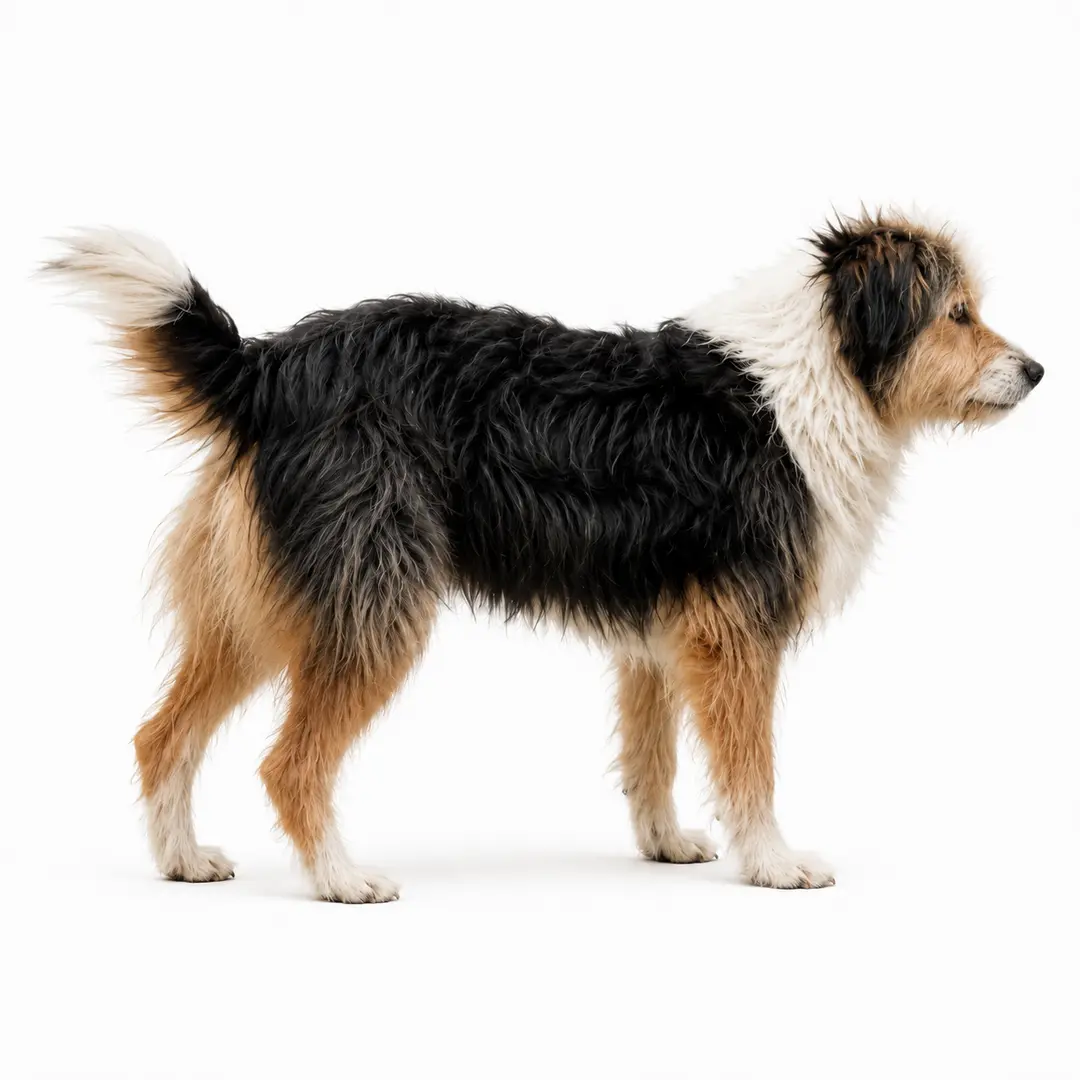
The Patagonian Sheepdog, known in Chile as the Magellanic Sheepdog or Magellanic Barbuch, is a working sheepdog from the far south of Chilean Patagonia. It was developed in Magallanes, where sheep farming required dogs capable of working in wind, cold, open fields, and long days alongside riders and shepherds. The breed is not recognized by the FCI, but Chilean canine and preservation sources treat it as an important regional working breed. Its value is practical: gathering sheep, moving flocks, responding to commands, and remaining useful in difficult weather.
General details
The Patagonian Ovejero is a medium-sized, rustic, agile sheepdog. Chilean descriptions present it as strong without being coarse, slightly longer than tall, and capable of efficient movement for many hours. Size varies by sex and working condition, but the dog should be fit rather than bulky. It needs enough substance for climate and terrain, yet enough speed and flexibility to turn and control sheep. The coat is medium to long, dense, and weather resistant. Many dogs have a rough or bearded facial look, which explains the name Barbucho. Colors and markings vary in the working population and may include black, gray, merle, tricolor, sable, and white markings. Ears can be semi-erect or dropped. As a household dog, the breed needs more than casual walks: herding-style training, obedience, tracking, agility, long hikes, or another regular job are strongly preferred.
Breed history in brief
The breed's history is tied to sheep farming in Chilean Patagonia, especially Magallanes. European settlers and ranch workers brought herding dogs, including British-style sheepdogs and farm collies, to manage large flocks. Over generations, dogs that could work in local weather, terrain, and ranch systems were selected by function. The result was a recognizable Patagonian type: resilient, intelligent, work-oriented, and closely connected to rural sheep culture. The Kennel Club de Chile has published an Ovejero Magallanico standard, and Chilean advocates have promoted documentation and preservation. That matters because working landraces can disappear quietly when ranch practices change or uncontrolled crossing becomes common. Internationally, the breed remains little known, so it should be described as a Chilean regional herding breed with national preservation work, not as an FCI-recognized breed.
Breed characteristics
The Patagonian Ovejero should give an impression of toughness, balance, and attention. It has a practical working body, strong feet, muscular shoulders and hindquarters, and free movement rather than showy movement. The coat protects against cold wind and changing weather but needs regular brushing, especially during shedding or after work in mud, grass seeds, or burrs. Feet, nails, teeth, ears, and skin should be checked often in outdoor dogs. Temperament is central. A good Ovejero is alert, trainable, persistent, and strongly bonded to its handler. It may think independently while working sheep but still respond to commands. In a casual pet home this can become chasing, barking, controlling movement, or frustration without structure. Early socialization with people, dogs, children, livestock, vehicles, and normal farm or town activity is important. Training should be fair, consistent, and built around clear tasks.
Common health problems
The published specific health data for the Patagonian Sheepdog is limited. This does not mean the breed has no problems; it means there isn't yet a public database comparable to those of many international breeds. A prudent approach combines general herding dog controls with attention to family history. Potential concerns include hip dysplasia, elbow dysplasia, eye diseases, dental disease, skin or ear irritations from outdoor work, and traumatic injuries. Working dogs may also suffer from cuts, ligament injuries, strains, parasites, and regional diseases. Dogs that inherit merle from both parents may have a higher risk of serious eye and hearing defects; excessive white can also be associated with congenital deafness in dogs, so color genetics must be managed responsibly. Breeders should prioritize healthy movement, stable temperament, genetic diversity, eye and orthopedic screenings, and longevity records.
What does genetics say about your pet? Start your journey today.
Get a special 5% discount on your first kit.
Connection error. Please try again later
You have successfully subscribed.
Don't you know your dog's true nature yet?
Unlock the secrets of your pet's DNA with our two ranges.