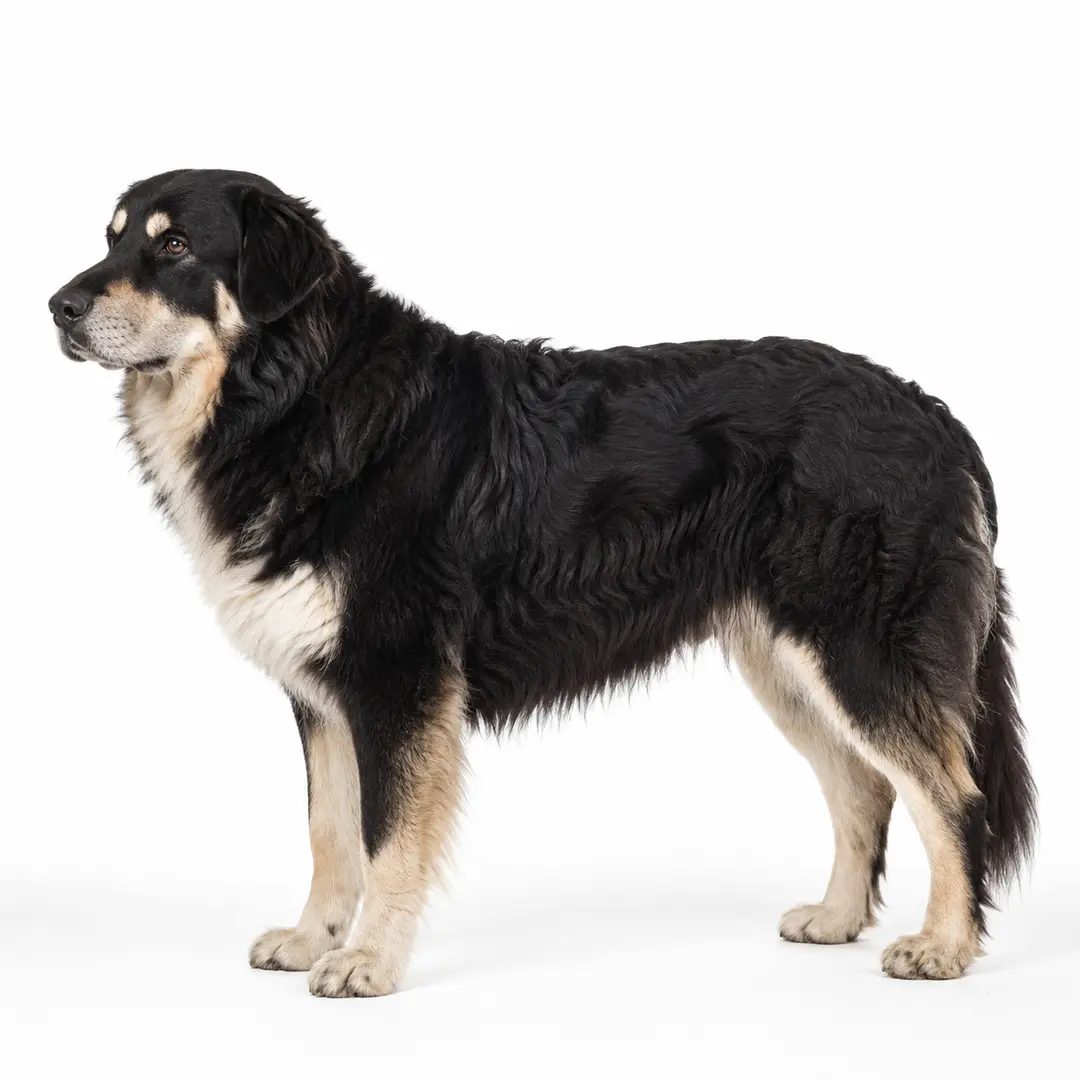
The Sila Shepherd, or Sila Shepherd Dog, is a Calabrian livestock guardian originating from the Sila plateau and the Calabrian Apennines. ENCI registers it as an admitted breed in the RSA, the Open Supplementary Register, with recognition procedures initiated. This means it should be cautiously presented as an Italian breed in recovery, not as an internationally fully recognized FCI breed. It is a large, powerful, long-haired guardian, developed to protect goats, sheep, and rural properties, especially against wolves in harsh mountain terrain.
General details
ENCI places the breed in Group 1, sheepdogs and cattle dogs, Section 1. The provisional standard of the Sila Shepherd Club describes a large, vigorous dog, harmoniously built, with strong bone, powerful musculature, agility, and a rectangular body. The coat is dense, long, and protective, with a collar especially visible in males and shorter hair on the face and the front of the legs. The breed is not primarily a herding or obedience dog; its traditional function is to guard livestock and property. It must be courageous, steadfast, devoted to the shepherd, and capable of living outdoors in harsh conditions.
Breed history in brief
The Pastore della Sila is linked to the old pastoral economy of Calabria. Breed histories trace it to dogs that accompanied livestock in the Calabrian mountains, with possible roots in dogs brought by ancient Indo-European and Greek populations. Whatever the exact origin, the type was maintained by terrain and function: remote valleys, rugged woods, poor diets, seasonal movement, and the need to defend flocks from wolves. As rural life changed, the population declined. Modern recovery work in the 2000s identified surviving dogs and promoted a provisional standard through the Sila Shepherd Club and ENCI procedures. The breed remains closely tied to its territory and to conservation of traditional pastoral culture.
Breed characteristics
The Pastore della Sila is a serious guardian: fearless, tireless, steady, and strongly devoted to its owner. In the presence of the shepherd it may accept strangers, but away from that context it can be reserved and protective. It needs space, secure fencing, controlled socialization, and a knowledgeable handler. It is best suited to experienced rural or guardian-breed homes, especially when owners want a calm but not automatically social dog. Puppies should meet people, livestock, vehicles, grooming, handling, and routine veterinary care early, while still preserving the dog's calm guardian instincts. The heavy coat needs regular brushing, especially during shedding and after work in wet or thorny terrain. Heat management is important in warm climates.
Common health problems
There is little race-specific public health research. The standard emphasizes hardiness and resistance, but a great mountain guardian equally needs modern prevention. Main concerns include hip and elbow dysplasia, osteoarthritis, cruciate ligament injuries, bloat risk in large, deep-chested dogs, ear and skin problems under dense fur, parasites, and heat stress. Breeders should have orthopedic evaluation, eye and cardiac checks when possible, and temperament assessment. Owners should keep the dog lean, avoid overworking growing puppies, provide shade and water, and check paws and coat after outdoor work. Being a recovering population, maintaining genetic diversity is as important as selecting for appearance.
What does genetics say about your pet? Start your journey today.
Get a special 5% discount on your first kit.
Connection error. Please try again later
You have successfully subscribed.
Don't you know your dog's true nature yet?
Unlock the secrets of your pet's DNA with our two ranges.