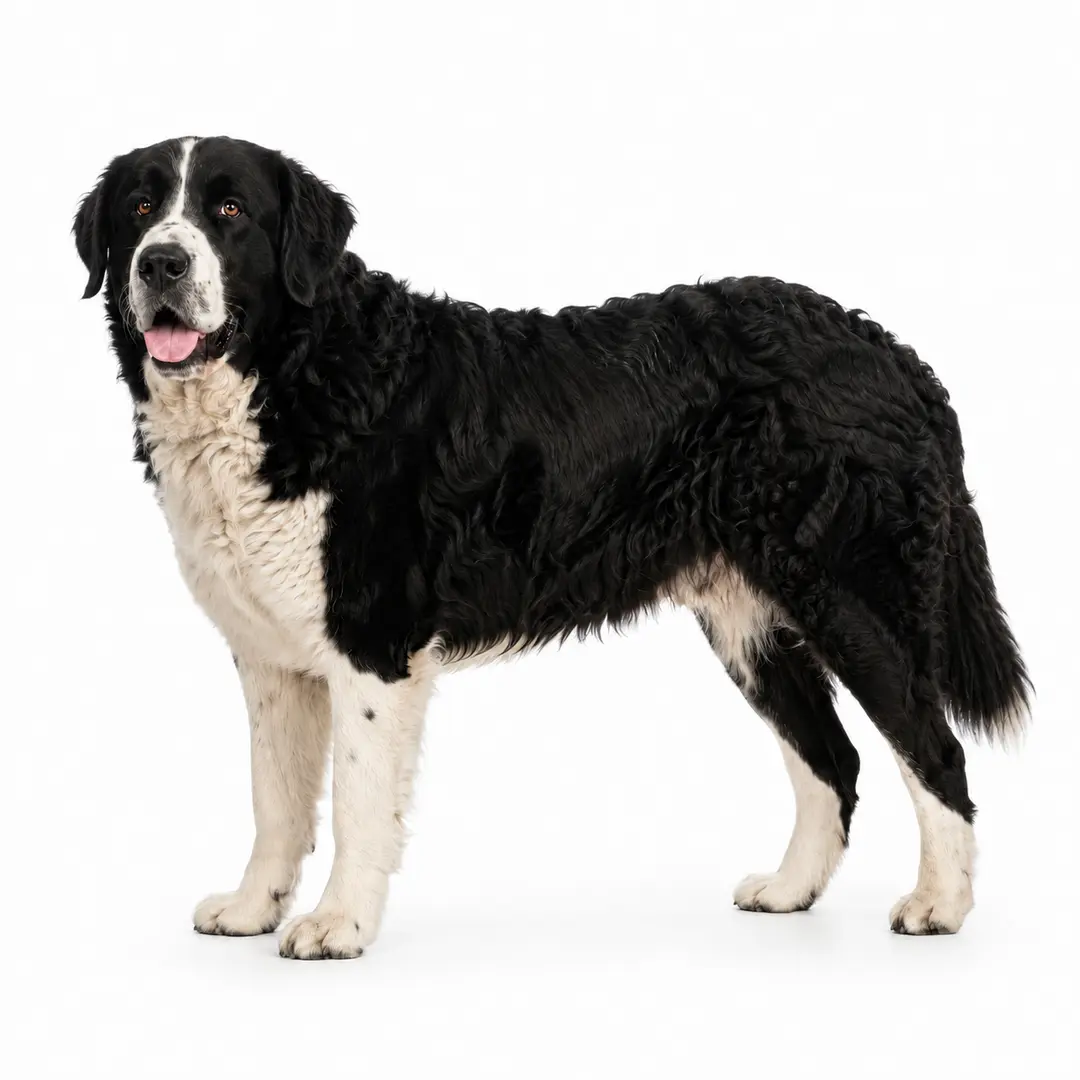
The Mannara Dog is a Sicilian livestock and farm guardian dog. ENCI registers it as Mastino Siciliano/Cane di Mannara, admitted to the RSR, the Registro Supplementare Riconosciuti. This status should not be overstated as full international FCI recognition; it indicates an Italian path of recovery and recognition for an indigenous population. The breed is a powerful and rustic molosser historically used to guard sheep, goats, rural enclosures, and agricultural properties in Sicily. It is valued less as a show dog than as a practical guardian shaped by the island's agriculture.
General details
ENCI places the breed in Group 2, molossoid dogs, mountain-dog type. It is a large, substantial dog, robust without being clumsy, with a rectangular body, strong bone, broad head, protective expression, and functional movement. The coat is practical for outdoor work
Breed history in brief
SAMANNARA, the ENCI-recognized specialist association, describes the Cane di Mannara as an ancient Sicilian dog, possibly present since the Bronze Age and influenced by Mediterranean movements of people, livestock, and guardian dogs. Historical accounts connect it with mastiff-type dogs depicted in ancient Sicilian contexts and with the need to protect herds from predators and thieves. The wolf disappeared from Sicily in the twentieth century, but the dog remained useful as a guardian of enclosures and farms. Modern recovery began in earnest with the foundation of SAMANNARA in 2010. After a regional census, the association proposed a provisional standard in 2013, and ENCI opened a supplementary registry in 2014. The breed later moved into the recognized supplementary register.
Breed characteristics
The Mannara Dog is calm, observant, territorial, and naturally protective. It is best suited to rural or experienced homes that understand livestock guardians. It needs early socialization, clear boundaries, and a job, but not harsh training. A well-raised Mannara should distinguish ordinary visitors from real threats and remain manageable around its owner. Because it is large and independent, leash manners, secure fencing, livestock introduction, and controlled exposure to people and dogs are essential. Coat care is moderate: brushing, checking ears and skin, and removing burrs or parasites after outdoor work. It can be affectionate with family but is not a dog for owners who want a sociable park companion with every stranger.
Common health problems
Breed-specific published health data remains limited. The standard and association material stress hardiness and adaptation to local conditions, but that does not replace screening. As a large molossoid guardian, the Mannara Dog should be monitored for hip and elbow dysplasia, cruciate ligament injury, arthritis, eyelid problems, dental issues, skin infections, parasites, and heat stress. Large, deep-bodied dogs may be vulnerable to gastric dilatation-volvulus, so owners should learn emergency signs of bloat and discuss feeding routines with a veterinarian. Breeding dogs should be evaluated for sound movement, stable temperament, and hereditary defects. Keeping puppies lean and avoiding forced exercise during growth are especially important.
What does genetics say about your pet? Start your journey today.
Get a special 5% discount on your first kit.
Connection error. Please try again later
You have successfully subscribed.
Don't you know your dog's true nature yet?
Unlock the secrets of your pet's DNA with our two ranges.