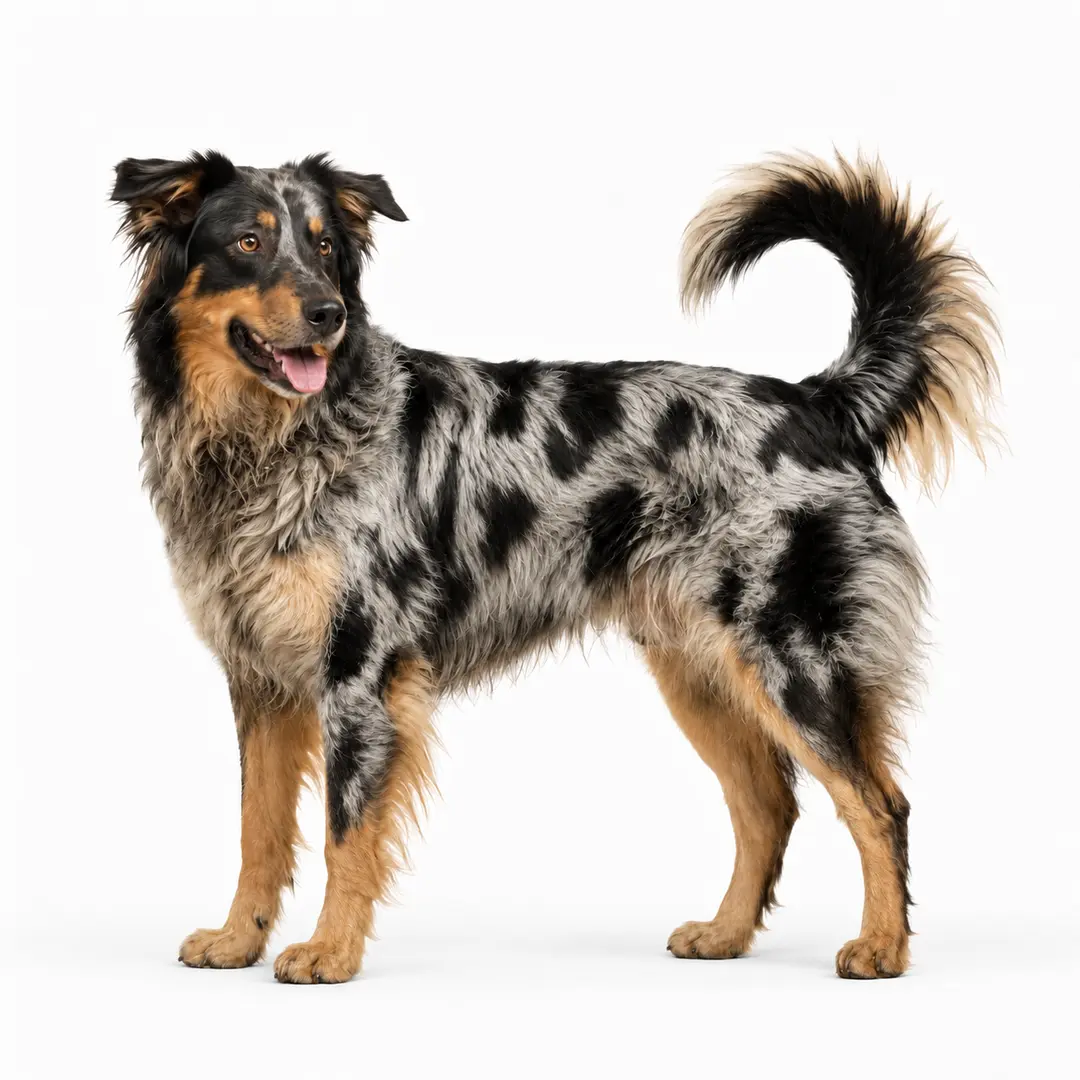
The Oropa Shepherd, officially registered by ENCI as Cane da Pastore di Oropa, is a herding dog from northern Italy, originating from the Biella area and the Alpine and Pre-Alpine droving routes of Piedmont. ENCI includes it in the RSA, the Open Supplementary Register, with recognition procedures initiated. Therefore, it should be described as a breed in the process of Italian recognition, not as an international breed fully recognized by the FCI. Unlike the great livestock guardian dogs of southern Italy, the Oropa Shepherd is, first and foremost, a practical herding and utility dog for moving sheep and cattle.
General details
ENCI places the breed in Group 1, Section 1. The Oropa association standard describes a medium-sized, mesomorphic, well-proportioned dog combining elegance and power. It has robust but not heavy bone, dry strong muscle, and a compact body that tends toward square. Dogs that traditionally work sheep are often at the lower end of size, while cattle-working dogs may be larger. The coat and colors vary within the local working type, but the essential points are agility, quick learning, balance, and usefulness. It is a shepherd's dog for driving animals, guarding them around mountain huts and farms, and adapting to seasonal movement from plains to alpine pasture.
Breed history in brief
The Pastore d'Oropa descends from old Italian shepherd dogs spread through the Alpine and pre-Alpine arc. Its home territory around Biella and the Sanctuary of Oropa gave the breed its name. For generations, these dogs helped shepherds move flocks and cattle between lowland and mountain grazing, working in close contact with people and livestock. Because selection was practical rather than show-oriented, local dogs were valued for balance, courage, patience, and capacity to learn. The Associazione Amici Cane da Pastore di Oropa has worked to document the type and protect it. ENCI now lists the breed in the supplementary open register while recognition procedures continue.
Breed characteristics
The Oropa Shepherd must be balanced, vigilant, intelligent, moderate, and patient. He can act with decisiveness and courage when needed, but the standard does not describe a reckless or unmotivatedly aggressive dog. He learns easily and can adapt to farm, herding, sport, and active companionship if managed well. As a working shepherd, he needs exercise, training, and mental tasks; without them, he may invent his own work by chasing, barking, or controlling movements. Early exposure to livestock, people, dogs, vehicles, and domestic routines is important. Coat care depends on its length, but usually includes brushing, nail trimming, ear checks, and inspection after working in the field. This breed is more suited to active owners than a sedentary lifestyle.
Common health problems
Breed-specific disease information is sparse. As a medium, athletic herding dog, the Pastore d'Oropa should be monitored for hip dysplasia, elbow problems, patellar issues, eye disease, dental problems, allergies, and work-related sprains or paw injuries. Selection should focus on sound movement, stable nerves, and practical working fitness as well as type. Because the population is still being consolidated, breeders should avoid narrowing the gene pool and should record health outcomes honestly. Owners can reduce risk by keeping the dog lean, building conditioning gradually, warming up before intense work, and using routine veterinary checks. Parasite and tick prevention are important for dogs that work in pastures and mountain environments.
What does genetics say about your pet? Start your journey today.
Get a special 5% discount on your first kit.
Connection error. Please try again later
You have successfully subscribed.
Don't you know your dog's true nature yet?
Unlock the secrets of your pet's DNA with our two ranges.